MCS certified · Cert. NAP-32603
Solar panel installation
Designed around your actual electricity use, installed by the same people who quoted it, and certified under MCS so you can claim the Smart Export Guarantee.
Our approach
Sized for your house, not for our order book
A lot of quotes are generated from a satellite image and a postcode. We'd rather come and look at the roof, get up into the loft space, check the consumer unit and go through a year of your electricity bills before proposing anything.
That usually means a smaller, better-matched system than you'd be sold elsewhere, and occasionally it means telling you your roof isn't worth doing. We'd rather say so at the survey than after the scaffolding is up.
- Full roof, loft and consumer unit survey before quoting
- Shading assessed properly, not estimated from aerial imagery
- Written quote naming the exact panel, inverter and battery models
- Fixed price: scaffolding, certification and paperwork included
The kit we fit
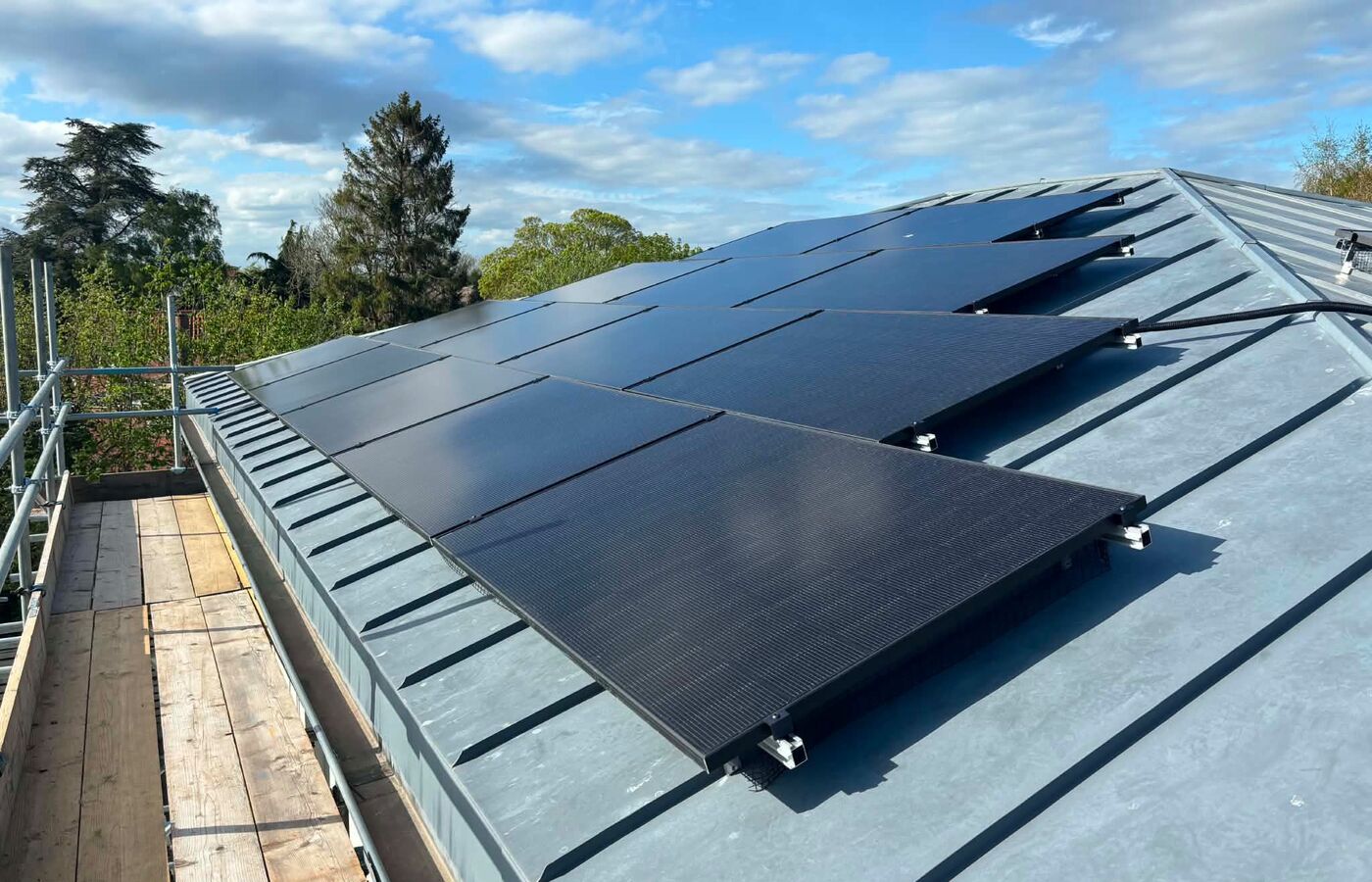
Components we'd actually put on our own roof
We're not tied to a single manufacturer, but these are the products we specify most often because they're reliable, well supported and sensibly priced.
What's included
Everything from the survey to the handover
We handle the whole job in-house, including the parts most solar companies subcontract. The electrical work is our original trade, so the consumer unit changes and the DNO paperwork aren't an afterthought.
Most domestic installations take one to two days on site. From first contact to a commissioned, certified system is typically four to eight weeks, most of which is scaffolding and DNO lead time rather than work on your house.
- Design, supply and installation
- Scaffolding arranged and cleared
- Consumer unit work and any remedial electrics
- DNO application (G98 or G99) to UK Power Networks
- MCS certificate issued on completion
- Smart Export Guarantee paperwork so you can start getting paid for exports
- Monitoring app set up and explained before we leave
Conservation & heritage areas
“We're in a conservation area, so we can't have solar.”
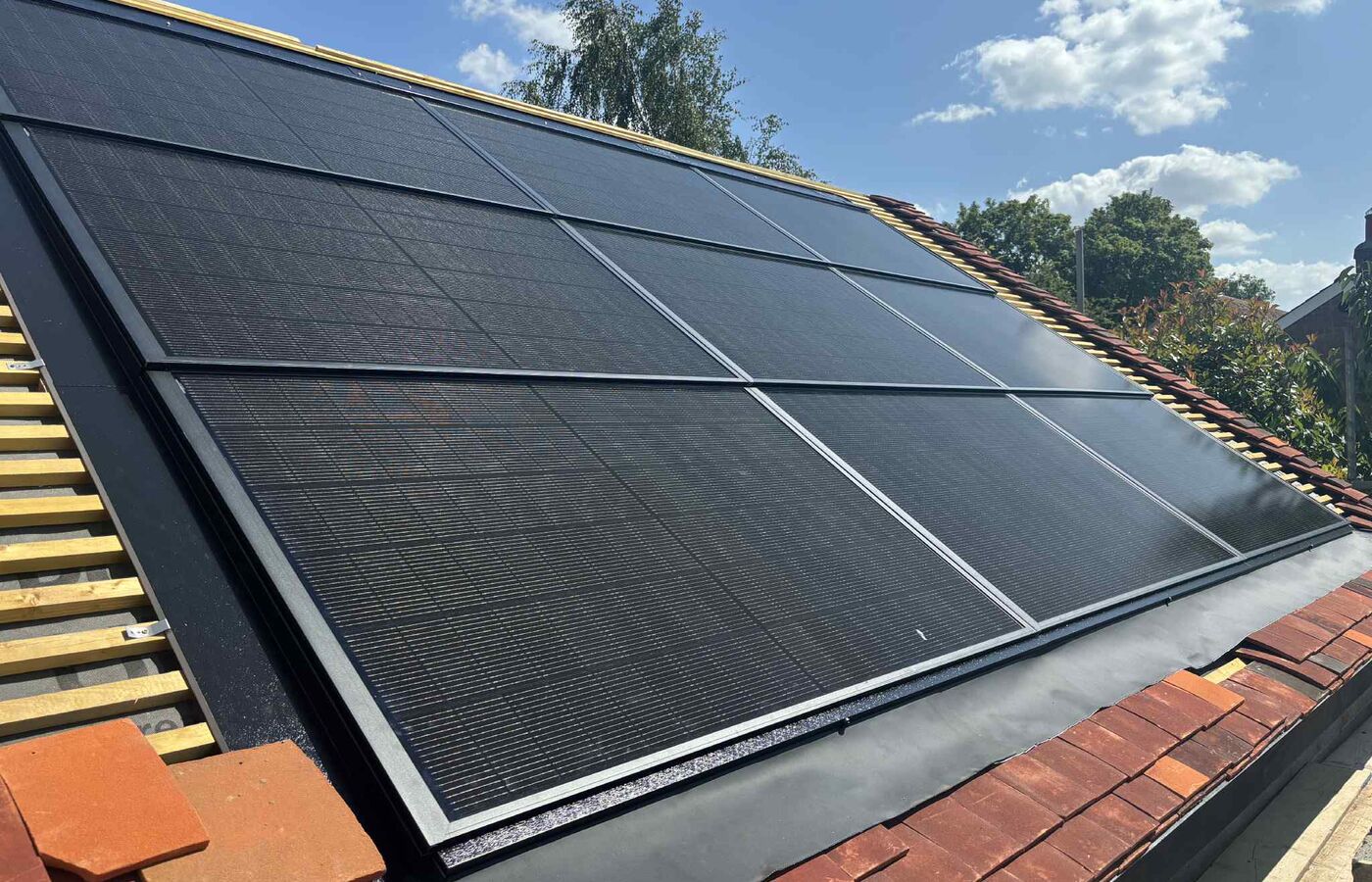
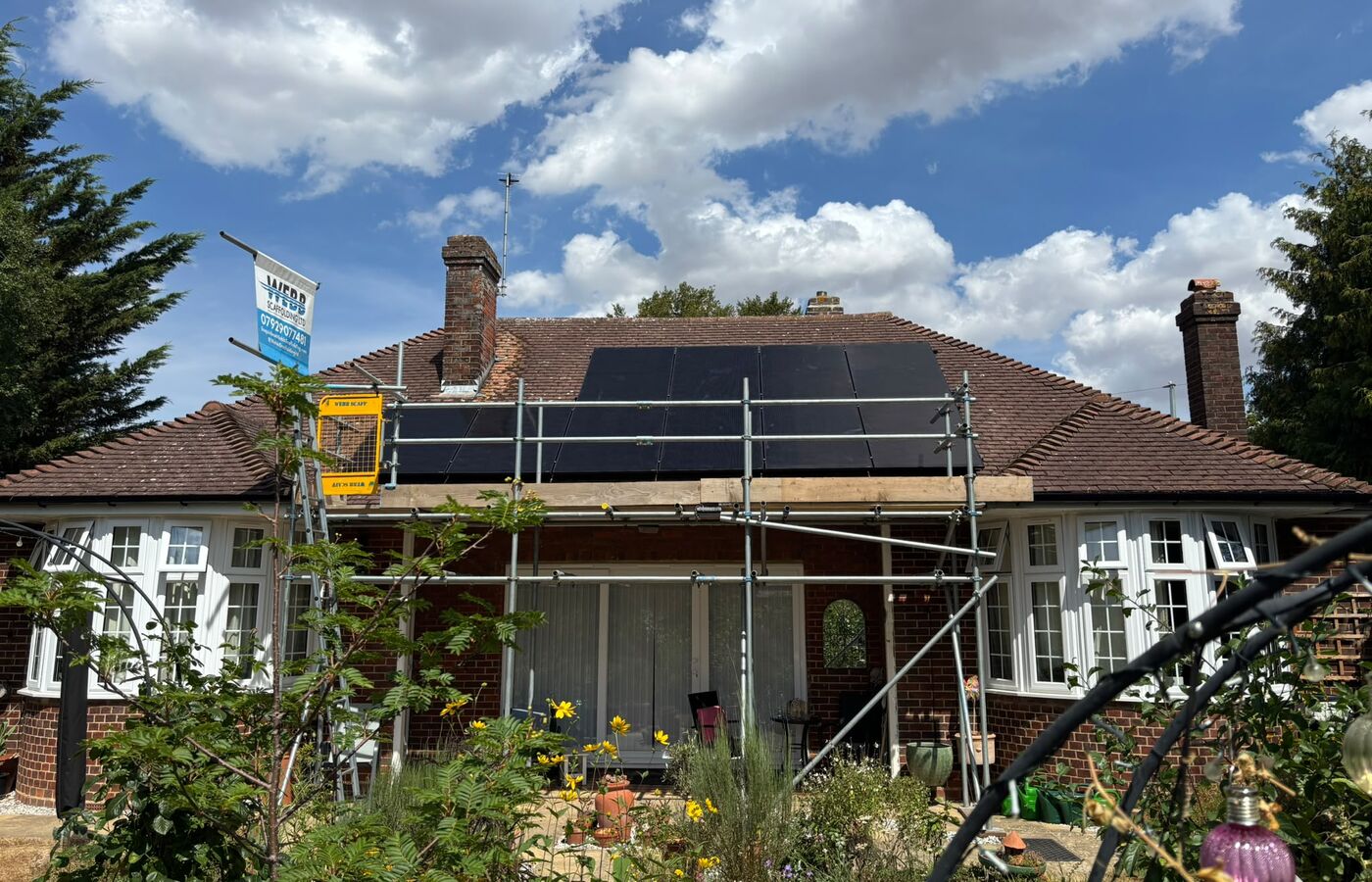
It's the most common misconception we hear, and in a lot of cases it simply isn't true. We recently completed an installation inside Letchworth's Heritage Area (ten Jinko 470W panels with Fox ESS hybrid inverter and battery), designed so the array sits sympathetically with the character of the property.
Conservation area status changes what you can do and where, and sometimes it means a planning application. It rarely means no. If you've been told otherwise, it's worth a second opinion.
Detail that shows
Bird guarding you have to look for
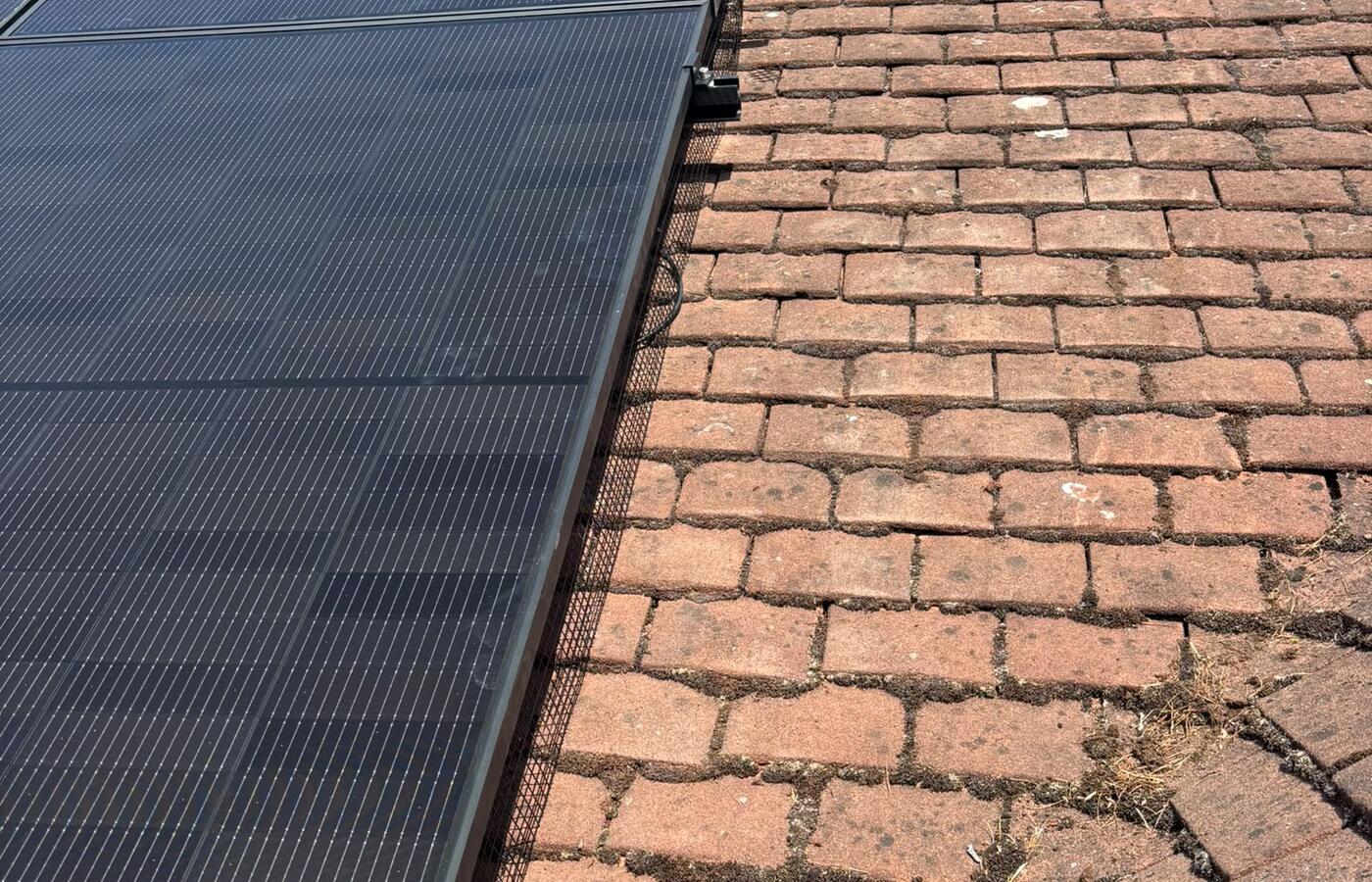
Pigeons nesting under an array is one of the most common problems on older installations: mess on the roof and in the gutters, noise coming through the ceiling, and restricted airflow under the panels. A mesh guard around the perimeter prevents all of it, and it should be part of every pitched roof installation.
The difference is in the fitting. Done in a hurry, the mesh stands proud of the panel edge and you get a grey band running round the whole array, visible from the pavement. We tuck ours in behind the frame and clip it tight to the panel edge, so it does its job without becoming the thing you notice about the roof.
Common questions
Things people usually ask
Do I need planning permission for solar panels?
Can I have solar in a conservation area?
What does a typical system cost?
How long will the panels last?
Will you be the one doing the work?
Where we work
Royston, and about half an hour around it
Almost every roof we work on is within about half an hour of our base. We're based in Litlington, just outside Royston, and cover Hertfordshire, Cambridgeshire, Essex and Bedfordshire from there: Royston, Melbourn, Baldock, Letchworth Garden City, Hitchin, Stevenage, Welwyn, Hertford, Saffron Walden, Cambridge, Buntingford, Duxford and the villages in between. Close enough to come back if you ever need us.
Get started
Free, no-obligation survey and quote
Tell us a bit about your property and we'll come and look at it. You'll get a straight answer either way, including if solar isn't the right fit.